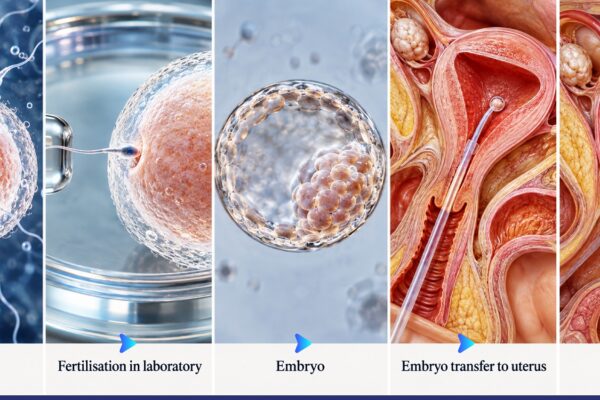
A test tube baby is a baby conceived through in vitro fertilisation (IVF), where an egg and sperm are fertilised outside the body in a laboratory. The resulting embryo is then transferred into the uterus, where pregnancy may develop.
The term “test tube baby” is commonly used by patients, but IVF is the medically preferred term. The process can involve several stages, from fertility assessment and ovarian stimulation to egg retrieval, fertilisation, embryo development and embryo transfer.
This article will explain the test tube baby process step by step, who may need IVF, how long treatment can take, potential costs in India, and what patients can expect during treatment.
Test Tube Baby Means IVF
“Test tube baby” is simply everyday language for a baby conceived through IVF. No baby actually grows inside a test tube. During IVF, an egg and sperm are combined in a laboratory dish, allowing fertilisation to occur outside the body. Once an embryo forms, it is transferred into the uterus, where it implants and develops naturally, exactly as in any pregnancy.
How Is a Test Tube Baby Born?
Once the embryo is transferred, pregnancy unfolds just like any other, with the baby growing inside the uterus for nine months. Regular antenatal check-ups monitor growth and the wellbeing throughout the pregnancy. Delivery isn’t automatically different either; depending on maternal health, the baby’s position and other clinical factors, doctors may recommend a vaginal delivery or a cesarean section.
Who May Need the Test Tube Baby Procedure?
The test tube baby procedure may be considered when other infertility treatment options haven’t resulted in pregnancy, or when specific female or male infertility factors make natural conception unlikely. IVF is not always the first treatment. Doctors usually try simpler treatments first.

Female Fertility Factors
- Blocked or damaged fallopian tubes (fallopian tube blockage)
- Ovulation disorders and ovulation dysfunction
- Endometriosis
- Reduced ovarian reserve, where clinically relevant
Unexplained infertility, where no clear cause is identified
Male Fertility Factors
- Low sperm count
- Poor sperm motility (movement)
- Abnormal sperm morphology
Other male-factor infertility issues affecting fertilisation
What Are the Steps in the Test Tube Baby Process?
The test tube baby process follows a structured sequence of stages, though the exact treatment plan can vary depending on a patient’s medical history, diagnosis, and individual circumstances. It’s worth noting that IVF treatment isn’t automatically the first-line option for every patient. Here’s how the process typically unfolds:
Step 1: Fertility Assessment and Treatment Planning
Treatment begins with a thorough medical history and fertility evaluation for both partners, including relevant blood tests, ultrasound scans, and a semen assessment. Based on these findings, the fertility specialist designs an individualised IVF plan.
Step 2: Ovarian Stimulation
Fertility medicines may be used to stimulate the ovaries, encouraging multiple follicles to develop. Progress is monitored throughout via ultrasound scans and/or blood tests.
Step 3: Egg Retrieval and Sperm Collection
Once follicles reach appropriate development, eggs are retrieved in a minor procedure. A sperm sample is generally collected around the same time, though previously stored sperm may be used instead.
Step 4: Fertilisation and Embryo Culture
Fertilisation may be achieved through conventional IVF, where eggs and sperm are combined in a dish, or intracytoplasmic sperm injection (ICSI), where a single sperm is injected directly into an egg. The resulting embryos are then cultured under close laboratory monitoring.
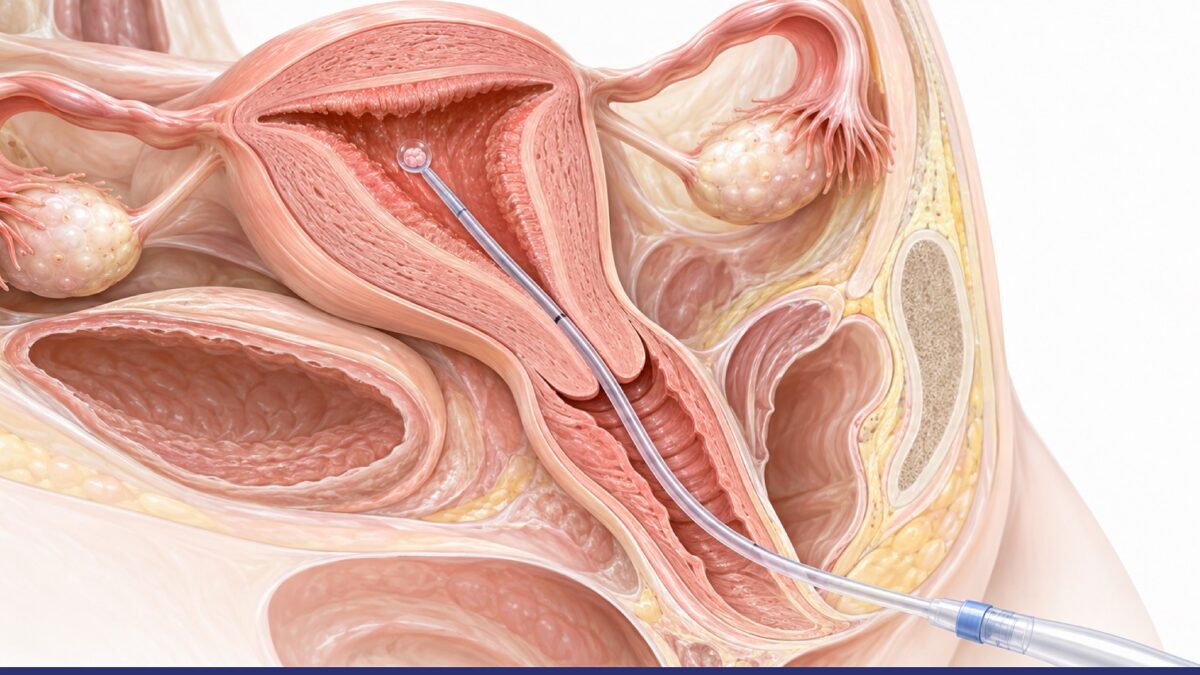
Step 5: Embryo Transfer
A selected embryo is transferred into the uterus. It’s important to understand that embryo transfer doesn’t guarantee pregnancy, as successful implantation depends on individual factors that vary from patient to patient.
Step 6: Pregnancy Testing and Follow-Up
After embryo transfer, patients typically observe a waiting period before pregnancy testing is carried out, following the fertility centre’s specific instructions to confirm whether implantation has occurred.
Illustrative Example (Anonymised)
A patient underwent fertility assessment, followed by ovarian stimulation with monitoring, egg retrieval, embryo transfer, and follow-up testing two weeks later. This is a representative example only, not an actual patient case.
Test Tube Baby Process: How Long Does It Take and What Does It Cost in India?
Understanding the test tube baby process also means understanding its timeline. A single IVF treatment cycle typically spans four to six weeks from the start of ovarian stimulation to embryo transfer, though the exact fertility treatment cycle duration varies depending on the patient’s individual treatment protocol and response to medication.
The cycle involves several connected stages: ovarian stimulation using fertility medicines, regular monitoring through scans and blood tests, egg retrieval, fertilisation in the laboratory, embryo development, and finally embryo transfer. Some patients may also require additional time for embryo freezing or subsequent frozen embryo transfer cycles.
IVF Treatment Cost in India
IVF treatment cost in India varies widely based on the patient’s specific requirements, the fertility clinic’s charges, and any additional procedures needed. The table below outlines common cost components, though exact pricing should always be confirmed directly with the treating fertility centre.
| Cost Component | What It May Include |
| Initial consultation | Fertility assessment and treatment planning |
| Investigations | Blood tests, ultrasound and semen assessment |
| IVF cycle | Ovarian stimulation, monitoring, egg retrieval and laboratory procedures |
| Medicines | Fertility and supportive medicines |
| Additional procedures | ICSI, embryo freezing or other clinically indicated services |
Pricing note: Add the medical centre’s verified current prices in ₹ rather than using a generic national figure.-
What Can Patients Expect After Embryo Transfer?
After embryo transfer, patients typically resume normal daily activities, though the fertility team may advise some initial rest. Following prescribed medicines exactly as instructed is essential during this phase, as luteal support helps maintain the uterine lining and supports embryo implantation. Missing doses or altering the schedule without medical guidance can affect outcomes. Understanding how a test tube baby is born also involves knowing what happens after embryo implantation, as the pregnancy continues much like a naturally conceived pregnancy once implantation is successful.
It’s natural to look for signs of pregnancy during this waiting period, but symptoms alone, such as mild cramping or fatigue, cannot confirm whether implantation or pregnancy has actually occurred. These sensations can result from the medications themselves rather than pregnancy. This is also relevant for couples where male infertility was a contributing factor, as post-transfer care applies equally regardless of the underlying cause of infertility.
For this reason, pregnancy testing should always be performed at the time recommended by the fertility centre rather than relying on home assumptions or early testing, which can produce inaccurate or misleading results.

When Is Pregnancy Confirmed?
Pregnancy is typically confirmed through a beta-hCG blood test, which measures pregnancy hormone levels more accurately than urine-based kits. Since clinical protocols can vary between fertility centres, patients should follow their own doctor’s specific instructions on timing rather than a universal date, ensuring a reliable and clinically accurate result.
What Factors Can Affect IVF Success?
Many patients researching what is the meaning of test tube baby also want to know what determines whether treatment works. IVF success is never guaranteed, and the pregnancy outcome depends on several biological and clinical factors affecting the overall IVF success rate.
- Maternal age: Egg quantity and quality decline with age, directly reducing ovarian reserve and affecting reproductive health overall.
- Ovarian reserve: A lower ovarian reserve can mean fewer eggs retrieved, influencing treatment planning and expected response to stimulation.
- Sperm quality: Sperm count, motility and morphology all play a role in fertilisation and subsequent embryo quality.
- Embryo quality: Not every fertilised egg develops into a strong, transferable embryo; embryo quality is a key predictor of implantation potential.
- Underlying conditions: Endometriosis, fibroids or uterine abnormalities can affect implantation, regardless of embryo quality.
- Individual variation: Success statistics differ by age group, treatment protocol and clinic population, so generic percentages don’t reflect individual chances.
Patients are best served discussing their specific pregnancy outcome probability directly with their treating fertility specialist, who can assess personal reproductive health and history.
Indian IVF/ART Regulation and Reporting
As per the National ART & Surrogacy Registry, maintained by the Indian Council of Medical Research (ICMR) under the Ministry of Health and Family Welfare, IVF outcomes are recorded nationally, though success rates vary by age, clinic and treatment type.
FAQ
Q1: What is a test tube baby and how is it born?
A test tube baby is a common term for a baby conceived through IVF. During IVF, an egg and sperm are brought together outside the body to create an embryo. The embryo is then transferred into the uterus. If implantation occurs and pregnancy continues normally, the baby is born through vaginal delivery or caesarean delivery when medically appropriate.
Q2: What is the test tube baby process step by step?
The test tube baby process generally includes fertility assessment, ovarian stimulation, monitoring, egg retrieval, sperm collection, fertilisation, embryo culture and embryo transfer. A pregnancy test is performed during follow-up. The exact treatment plan can vary depending on the patient’s age, fertility condition, test results and response to medicines.
Q3: How much does a test tube baby procedure cost in India?
The cost of an IVF or test tube baby procedure in India varies between cities, hospitals and fertility centres. The total may include consultations, investigations, medicines, egg retrieval, laboratory procedures and embryo transfer. Additional procedures can increase the cost. Patients should request a current, itemised estimate
Q4: Is a test tube baby the same as an IVF baby?
Yes. “Test tube baby” and “IVF baby” generally refer to the same thing. IVF (in vitro fertilisation) is the medical procedure in which an egg and sperm are combined in a laboratory to create an embryo.
The embryo is then transferred into the uterus, where pregnancy can develop naturally.
“Test tube baby” is an older, informal term commonly used to describe a baby conceived through IVF.
However, the baby does not actually grow inside a test tube. The embryo spends only a short time in the laboratory before being transferred to the uterus.
Q5: How long does the test tube baby process take?
The test tube baby (IVF) process usually takes about 3–6 weeks for one treatment cycle, depending on the treatment protocol and the individual’s response to medication.
Q6: Can IVF be used for male infertility?
Yes. IVF can be used to help treat infertility related to male factors, depending on the cause and severity of the problem.
Q7: Is a test tube baby procedure painful?
IVF can involve some discomfort, particularly from injections, ovarian stimulation and monitoring. Egg retrieval is usually performed with pain relief or sedation, so significant pain is not expected during the procedure. Some patients may experience cramping or bloating afterwards. Your fertility specialist can explain the expected discomfort and pain-management options before treatment.
Q8: Where can I get a test tube baby treatment in Hyderabad?
Patients looking for test tube baby treatment in Hyderabad should choose a properly registered fertility facility with qualified reproductive-health specialists and appropriate laboratory services. Before starting treatment, ask about the recommended IVF approach, expected timeline, total cost, embryo-lab facilities and how success rates are reported for patients in your age group.
CONCLUSION
The test tube baby process, medically known as IVF, involves several carefully monitored stages, from fertility assessment and ovarian stimulation to fertilisation, embryo development and embryo transfer. The treatment plan and expected outcome vary from patient to patient.
Considering IVF treatment? Book a consultation with a qualified fertility specialist to understand whether the test tube baby procedure is appropriate for your situation and what treatment plan may be recommended.

Dr Loukya
Dr Loukya specializes in fertility care, reproductive medicine and minimally invasive gynaecological surgery. She works with couples to understand their fertility concerns, review previous treatment history and create an individualized treatment plan. Her approach focuses on clear explanations, appropriate evaluation and continued guidance throughout treatment.