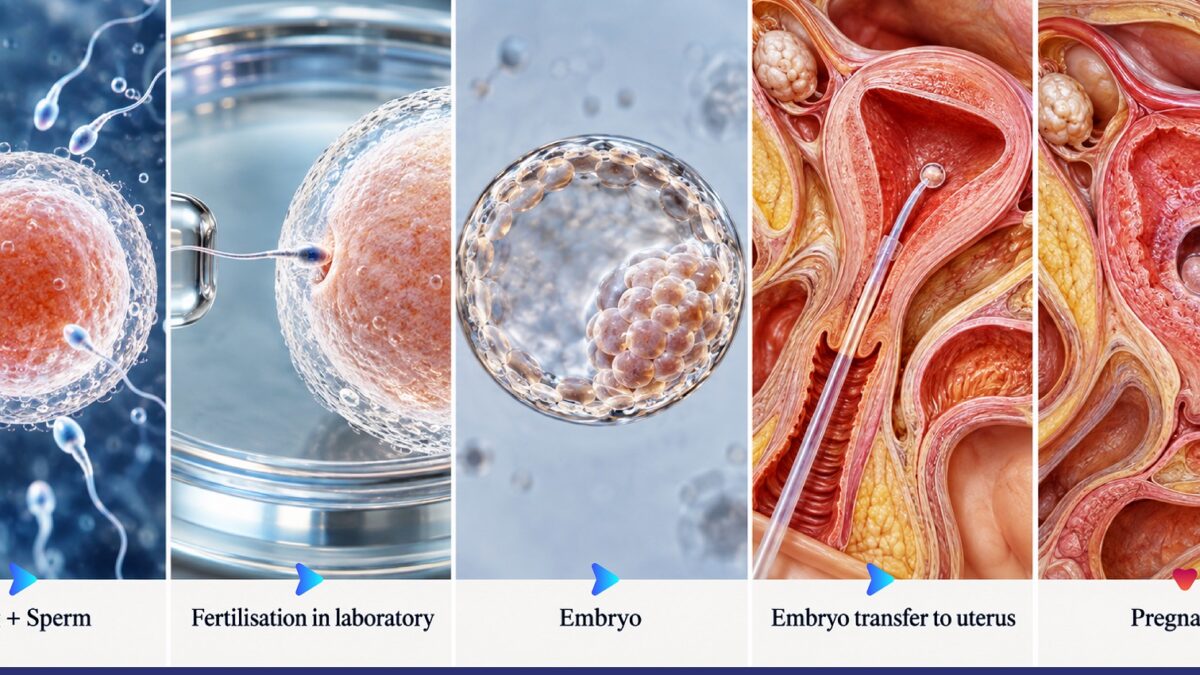
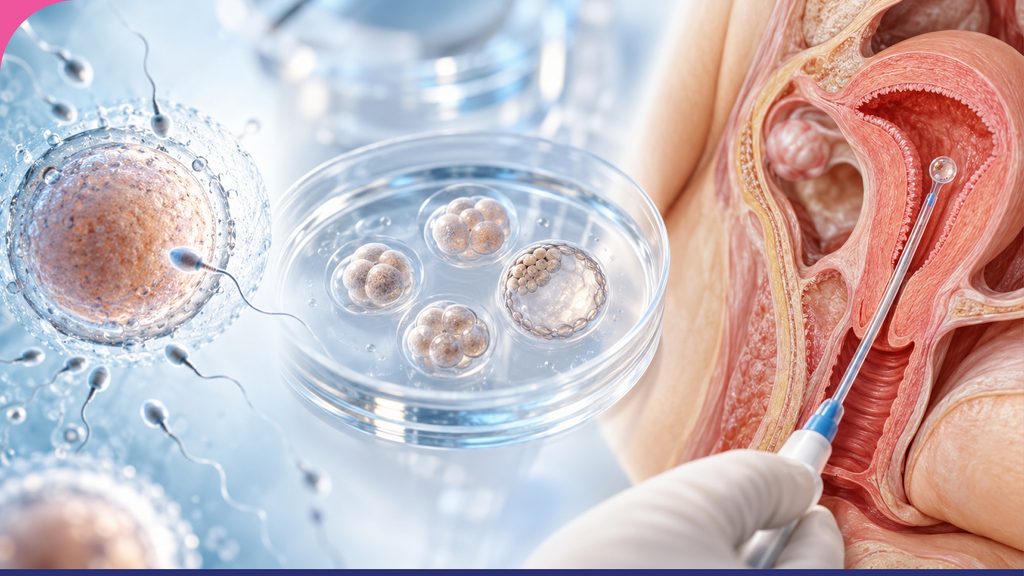
In vitro fertilization (IVF) is an assisted reproductive treatment in which an egg and sperm are combined in a laboratory to create an embryo. The embryo is then transferred into the uterus, where pregnancy may develop.
For patients considering fertility treatment, understanding what is In Vitro Fertilization can make the process easier to understand. This guide explains the meaning of IVF, why it may be recommended, the main treatment stages, possible risks and what patients in India should know before starting treatment.
When Is IVF Treatment Recommended?
IVF treatment may be considered for several fertility-related situations affecting both female infertility and male infertility. Fallopian tube blockage or damage to the fallopian tubes is a common reason, as it prevents natural fertilisation. Ovulation disorders, where eggs aren’t released regularly, and reduced ovarian reserve can also make IVF appropriate. Certain male-factor infertility conditions, including poor sperm quality, often lead couples toward this infertility treatment. Endometriosis and unexplained infertility, where no clear cause is identified, are additional possible indications. Ultimately, a fertility specialist determines whether IVF is appropriate only after thorough evaluation of each patient’s individual diagnosis and medical history.

What Are the Main Steps of the IVF Process?
To explain in vitro fertilization simply, the treatment follows a clear, sequential process from ovarian stimulation to pregnancy testing. Each step builds on the last, guided closely by the fertility team throughout.
IVF Process at a Glance
| IVF Stage | What Happens |
| Ovarian stimulation | Medicines are used to stimulate the ovaries to develop multiple follicles containing egg |
| Monitoring | Ultrasound and blood tests are used to monitor follicle development and harmones levels |
| Egg retrieval | Mature eggs are collected from ovaries using a minimally invasive procedure |
| Sperm preparation | A sperm sample is collected and prepared for fertilisation |
| Fertilisation | Eggs and sperm are combined in the laboratory for fertilization |
| Embryo culture | Fertilised eggs develop into embryos under controlled laboratory conditions |
| Embryo transfer | A selected embryo is transferred into the uterus |
| Pregnancy testing | A pregnancy test is performed after the recommended waiting period |
Note: IVF outcomes vary between patients, depending on factors such as age, ovarian reserve, sperm parameters, embryo quality and underlying medical conditions.
How Long Does an IVF Cycle Take?
Understanding what is IVF pregnancy also means understanding that the IVF cycle involves several appointments over several weeks, rather than a single procedure. The treatment timeline varies depending on the individual’s protocol and response to hormonal stimulation.
Patients typically begin with fertility injections to support follicle development, followed by regular follicle monitoring through transvaginal ultrasound and blood tests. Some may experience mild bloating or discomfort during this phase. Egg retrieval follows once follicles reach appropriate development, performed as a brief procedure under sedation, with embryo transfer recovery generally quick and most patients resuming normal activities shortly after.
Following embryo transfer, a pregnancy test measuring serum beta-hCG provides pregnancy confirmation, performed at the time advised by the Fertility & Maternity Centre team rather than through early home testing.
Real Data Point
The Indian Council of Medical Research (ICMR) has reported that an estimated 15–20 million couples in India suffer from infertility. ICMR Bulletin – Need and Feasibility of Providing Assisted Technologies for Infertility Management
What Are the Benefits of IVF?
In vitro fertilization offers several benefits for couples facing infertility treatment, using assisted reproductive technology to improve pregnancy chances where natural conception hasn’t worked.
- Enables conception for couples with blocked fallopian tubes, ovulation disorders or unexplained infertility
- Addresses male-factor infertility through techniques like ICSI during fertilization
- Allows embryo culture and selection before embryo transfer, supporting informed treatment decisions
- Offers a structured, monitored approach through ovarian stimulation, egg retrieval and assisted reproduction
- Provides an option for patients who haven’t conceived through simpler fertility treatment methods
- Can be combined with genetic testing or embryo freezing where clinically appropriate
What Are the Risks and Side Effects of IVF?
Like any medical treatment, IVF carries certain risks and side effects that patients should discuss with their fertility specialist beforehand.
- Ovarian stimulation side effects, including bloating, mood changes or mild discomfort
- Risk of ovarian hyperstimulation syndrome (OHSS) in some patients responding strongly to medication
- Egg retrieval complications, such as bleeding or infection, though uncommon
- Anesthesia-related risks during the egg retrieval procedure
- Increased chance of multiple pregnancy if more than one embryo is transferred
- Small risk of ectopic pregnancy, even after embryo transfer
- Emotional and physical demands associated with assisted reproductive technology and IVF complications
Patient Example (Illustrative, Anonymised)
One patient with endometriosis needed extended ovarian stimulation before egg retrieval, while another with unexplained infertility proceeded straightforwardly to embryo transfer. Individual circumstances and outcomes varied considerably, with no guaranteed result for either.
FAQ
Q1: What is the difference between IVF and ICSI?
IVF and ICSI are both assisted reproductive techniques, but fertilisation is performed differently. In conventional IVF, eggs and sperm are placed together in a laboratory to allow fertilisation. In ICSI, a single sperm is injected directly into an egg. The choice between these approaches depends on factors such as sperm parameters and previous treatment history.
Q2: When is a pregnancy test done after IVF?
After embryo transfer, patients usually wait for the period advised by their fertility team before taking a pregnancy test. A blood test measuring beta-hCG can help confirm pregnancy. Testing too early may give an unclear result because pregnancy hormone levels may still be low. The fertility team will provide the appropriate testing date.
Q3: Can sperm quality influence IVF success rates?
Yes. Sperm count, motility, morphology, and overall sperm quality can affect fertilisation and embryo development. Depending on the findings, techniques such as intracytoplasmic sperm injection (ICSI) may be considered during IVF.
Q4: Does embryo quality affect the outcome of IVF?
Yes. Embryo quality is an important consideration when selecting an embryo for transfer. Factors such as embryo development and cellular characteristics can help fertility specialists determine which embryos may have a better chance of implantation and continued development.
Q5: What factors affect IVF success in India?
IVF outcomes can vary from one patient to another. Important factors include age, ovarian reserve, sperm quality, embryo development, underlying fertility conditions and previous treatment history. The quality of the laboratory and the individual treatment protocol can also matter. A fertility specialist can explain the patient’s expected outcome based on their medical assessment.
Q6: What happens during egg retrieval in an IVF cycle?
Egg retrieval, also called oocyte retrieval, is a procedure used to collect mature eggs from the ovaries after ovarian stimulation. The procedure is usually performed using ultrasound guidance. The collected eggs are then taken to the embryology laboratory for fertilisation. Patients receive specific instructions about medicines, preparation and recovery from their fertility team.
Q7: What is embryo transfer in IVF treatment?
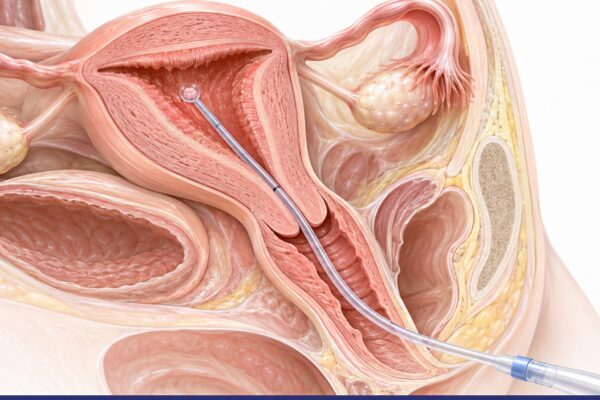
Embryo transfer is the stage of IVF in which a selected embryo is placed inside the uterus using a thin catheter. The procedure is performed after embryo development in the laboratory. If implantation occurs, pregnancy can develop. The timing of transfer depends on the patient’s treatment plan and embryo development.
CONCLUSION
IVF is an established assisted reproductive treatment that helps fertilisation and early embryo development take place in a laboratory before embryo transfer. The right treatment approach depends on the patient’s individual fertility assessment.
If you are considering IVF treatment, book a consultation with a qualified fertility specialist to understand your options, treatment plan, and expected costs.

Dr Loukya
Dr Loukya specializes in fertility care, reproductive medicine and minimally invasive gynaecological surgery. She works with couples to understand their fertility concerns, review previous treatment history and create an individualized treatment plan. Her approach focuses on clear explanations, appropriate evaluation and continued guidance throughout treatment.